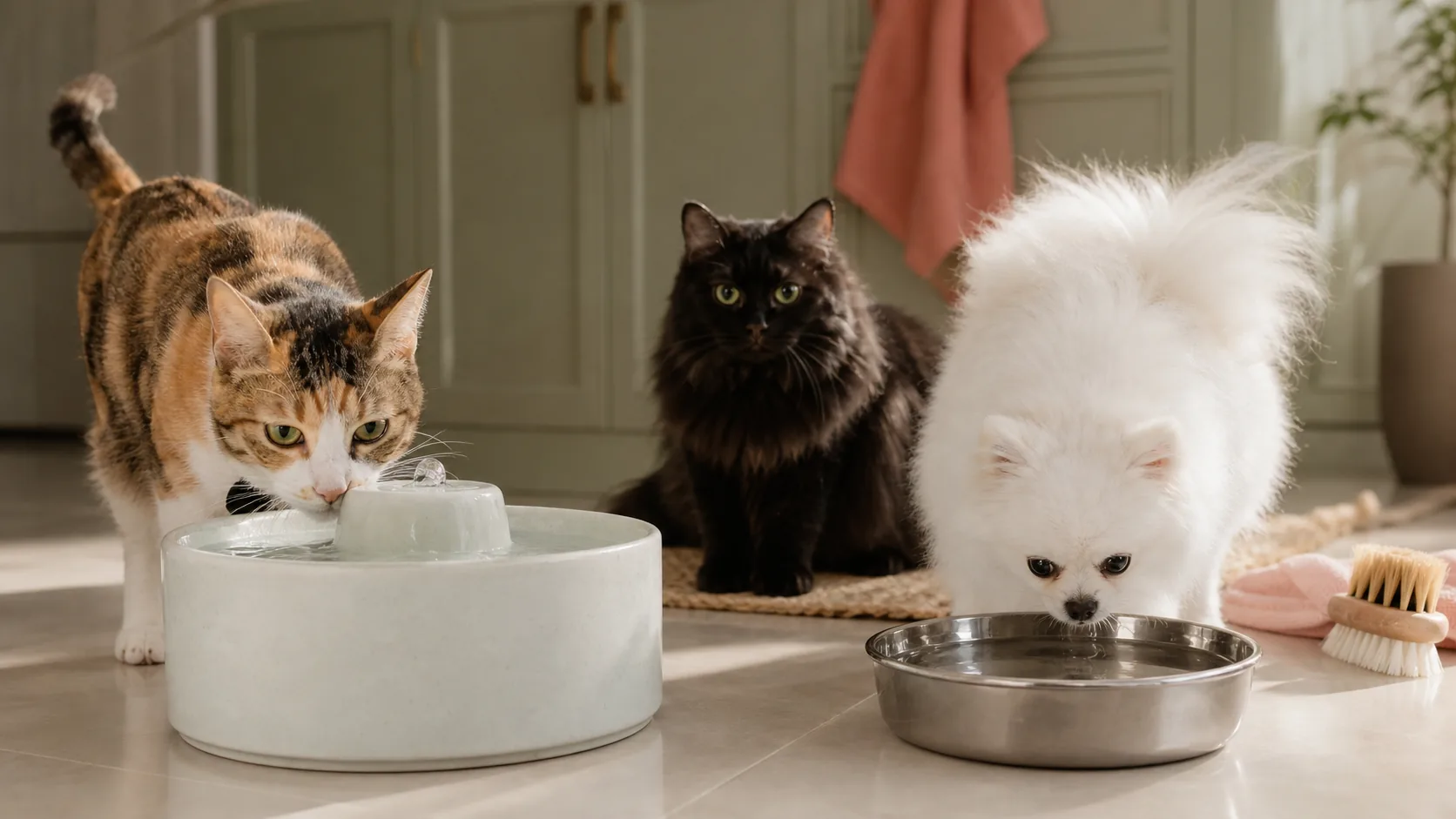
A fountain is useful when a pet prefers moving water and the household can clean the pump and wet surfaces on schedule. A wide stable bowl is often better when silence, visibility and simple sanitation matter most. The best system may be both, placed in separate locations.
Choose a water system, not a gadget
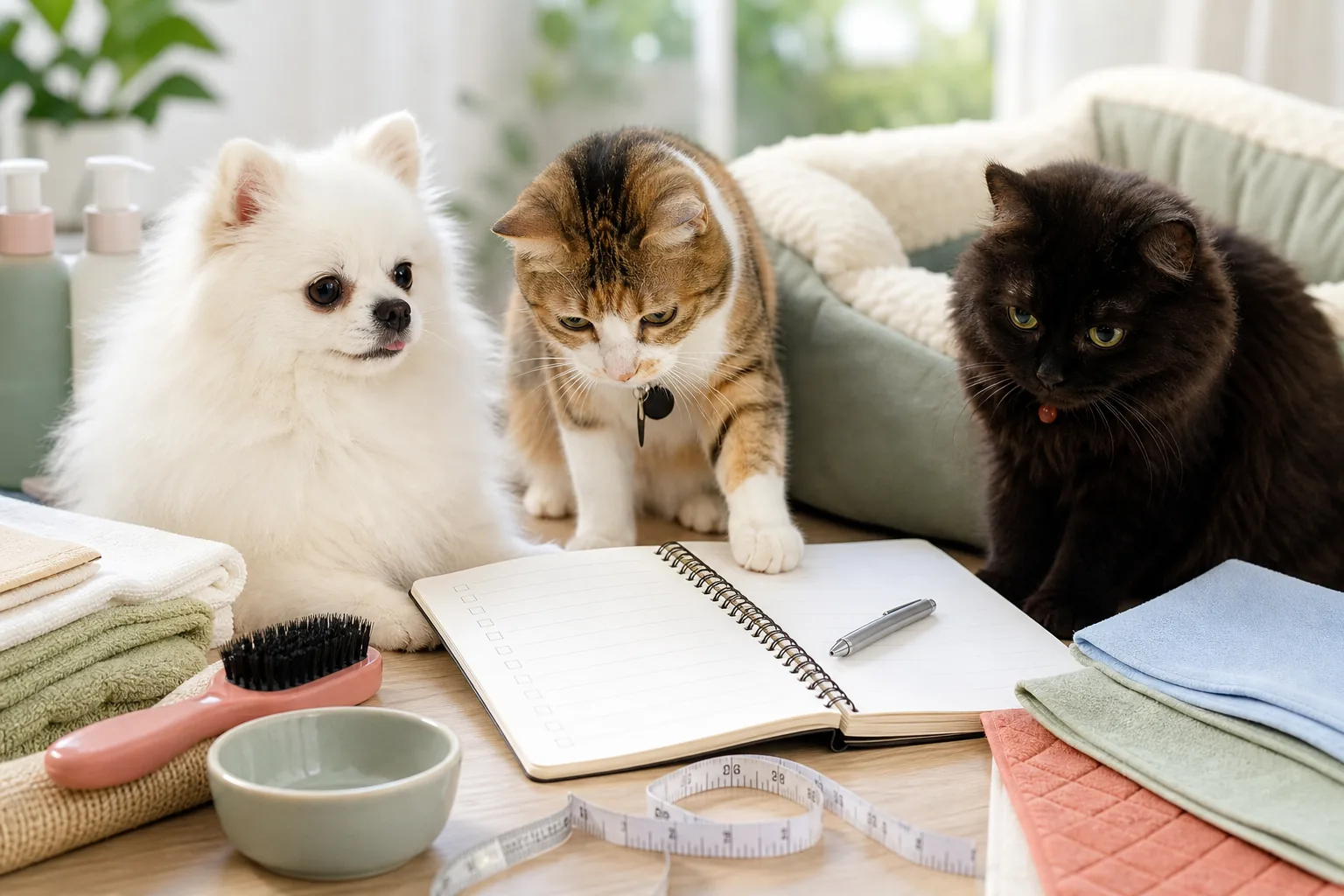
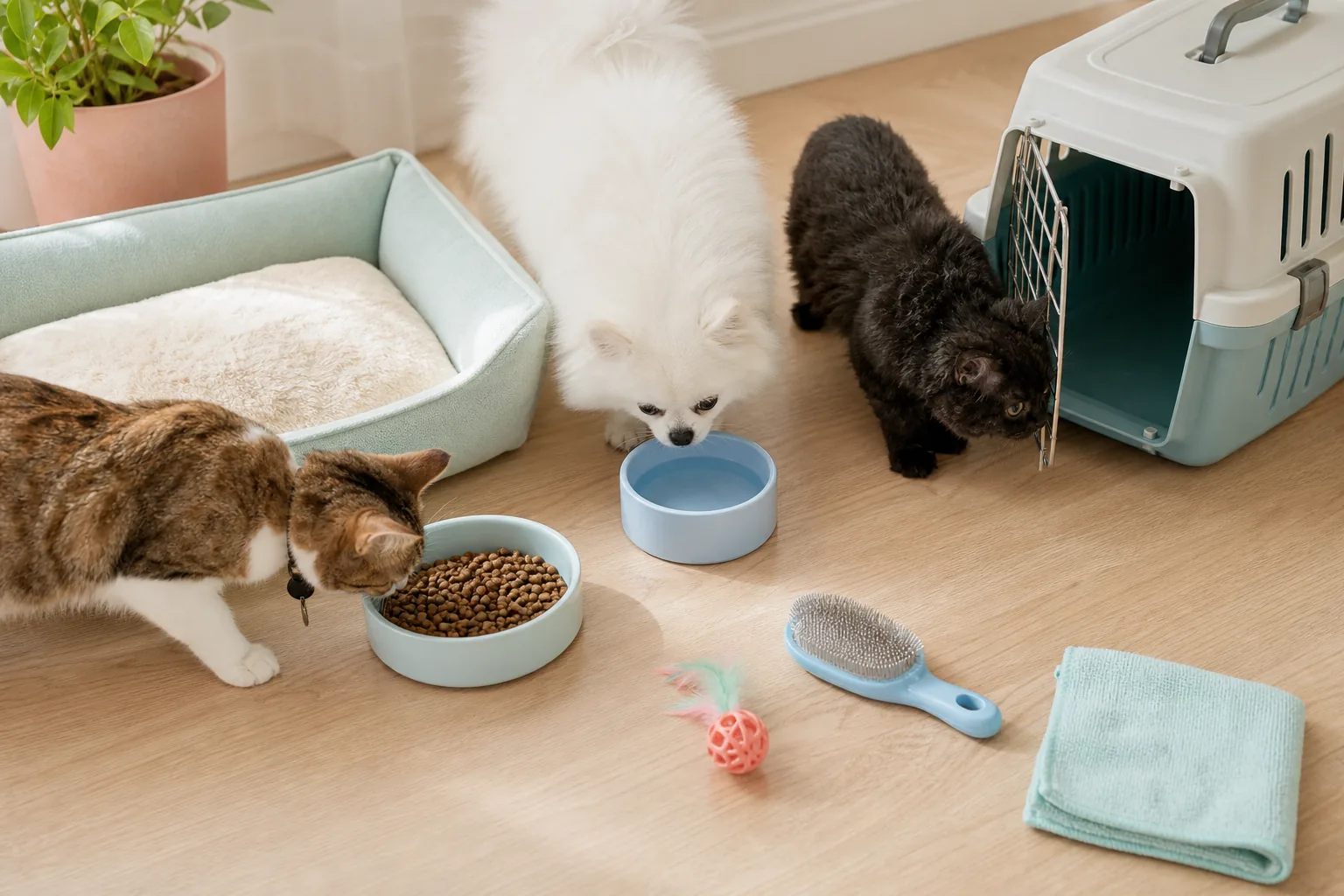
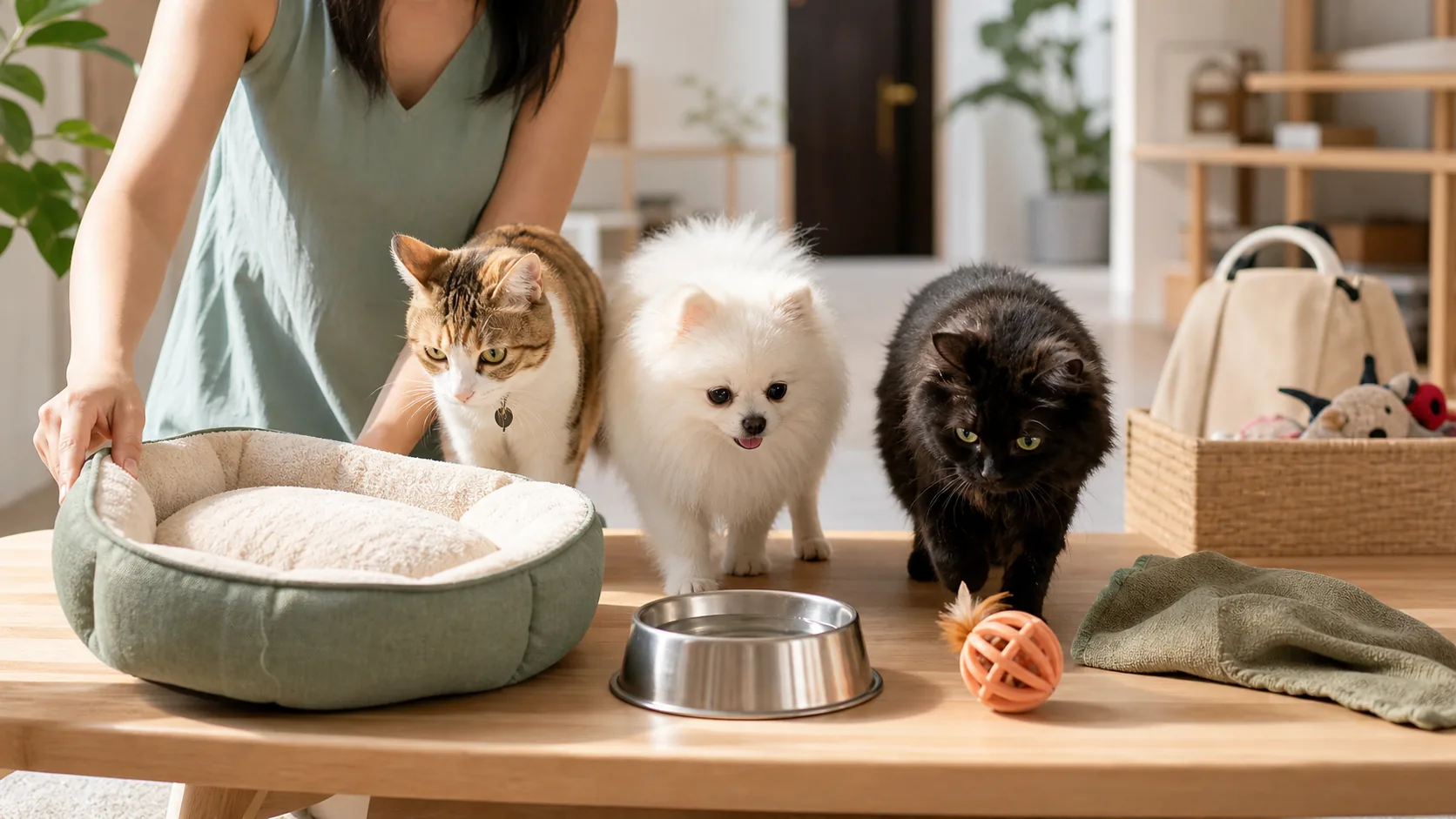
Water access depends on more than the container. Placement, freshness, material, refill frequency, nearby food, household traffic and competition between pets all change how a station works. Jiaotang may investigate movement immediately, Pearl may prefer a quiet edge of the room, and Pudding needs a comfortable rim height. A single product cannot erase those differences.
Fountain and bowl compared
| Question | Fountain | Wide bowl |
|---|---|---|
| Noise | Motor and water sound vary as the level drops | Silent |
| Cleaning | Reservoir, channels, filter seat and pump | Open surface with few hidden parts |
| Power | Needs an outlet, cable route and outage plan | No power required |
| Freshness cue | Movement may attract some pets | Freshness depends on visible replacement |
| Monitoring | Consumption can be harder to estimate | Level is easy to see |
| Placement | Needs splash protection and cable clearance | Easy to add in several rooms |
The maintenance test matters most
Before buying a fountain, look for a pump that can be removed without tools, a reservoir with reachable corners and replacement filters that are actually available. Time a full clean, including the impeller cavity. If that task is likely to be postponed, the design is not a good match for the home.
Bowls also need routine care. Choose a stable, food-safe material and a shape that is easy to wash. Replace water rather than simply topping it up, and inspect non-slip bases for trapped moisture.
- Place the new option away from food and litter
- Keep the previous water source available during the transition
- Note voluntary visits instead of forcing interaction
- Record refill and cleaning time
- Listen at the lowest normal water level
- Check the floor, cable and base for moisture
Multi-pet homes often need more than one station
One beautiful fountain in a busy room may be less useful than two plain bowls in calm locations. Multiple access points reduce the chance that one pet or one closed door controls the entire water supply. They also provide resilience when a fountain is being cleaned or power is unavailable.
Our Portion Smart Auto Feeder page shows how we separate feeding convenience from hydration. Powered products should always have a simple backup routine.
When to ask a veterinarian
A sudden change in drinking, urination, appetite or energy is not a product-selection problem. Contact a qualified veterinarian. This article covers household setup and observed preference only.
Frequently asked questions
Do fountains automatically keep water clean?
No. Circulation and filters do not replace washing, water replacement and pump maintenance.
Which bowl material is easiest to inspect?
Stainless steel and glazed ceramic are common practical choices because their surfaces are visible and easy to wash when undamaged.
Can cats and dogs share one fountain?
They can, but monitor access, height and competition. A second water point is a sensible backup.