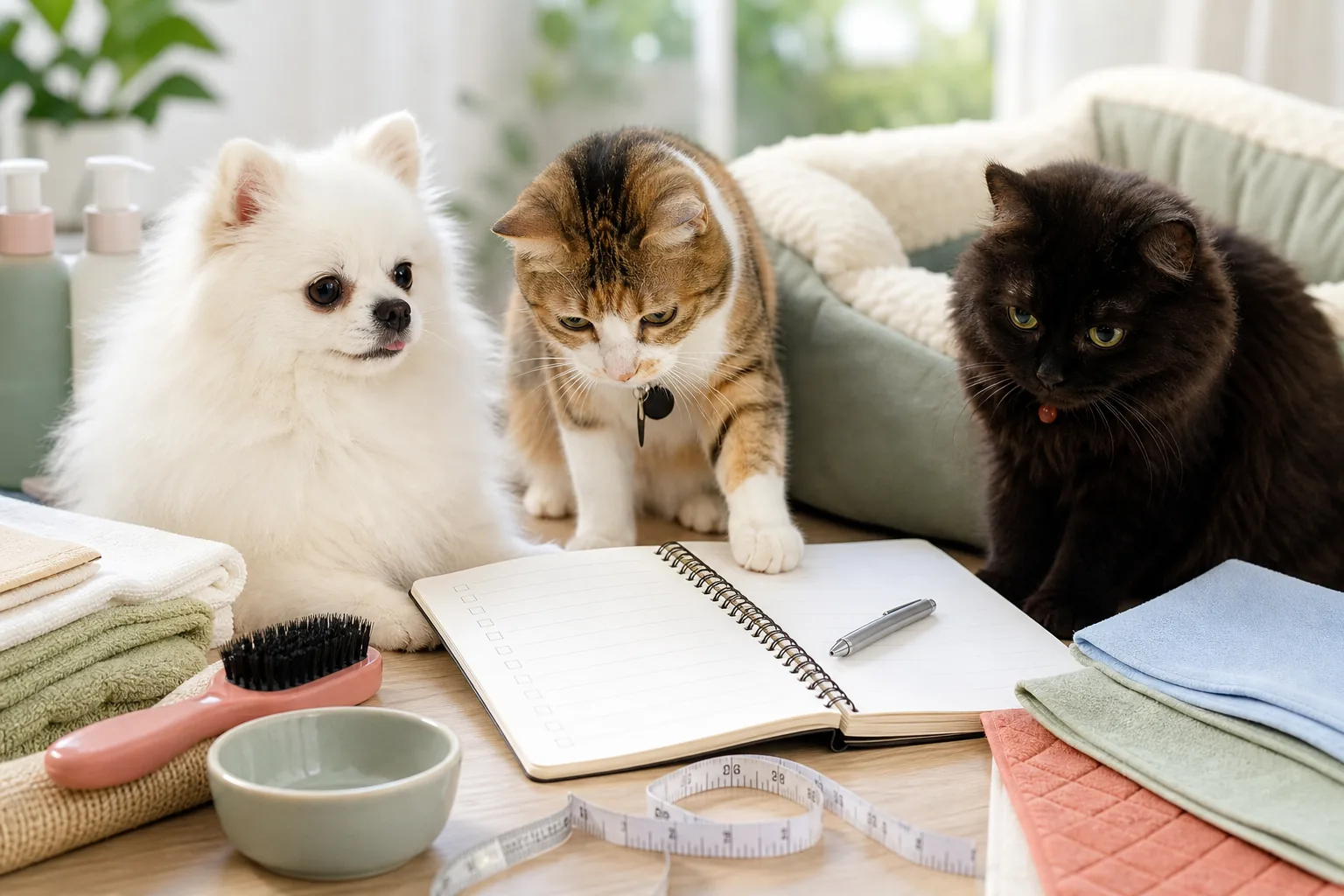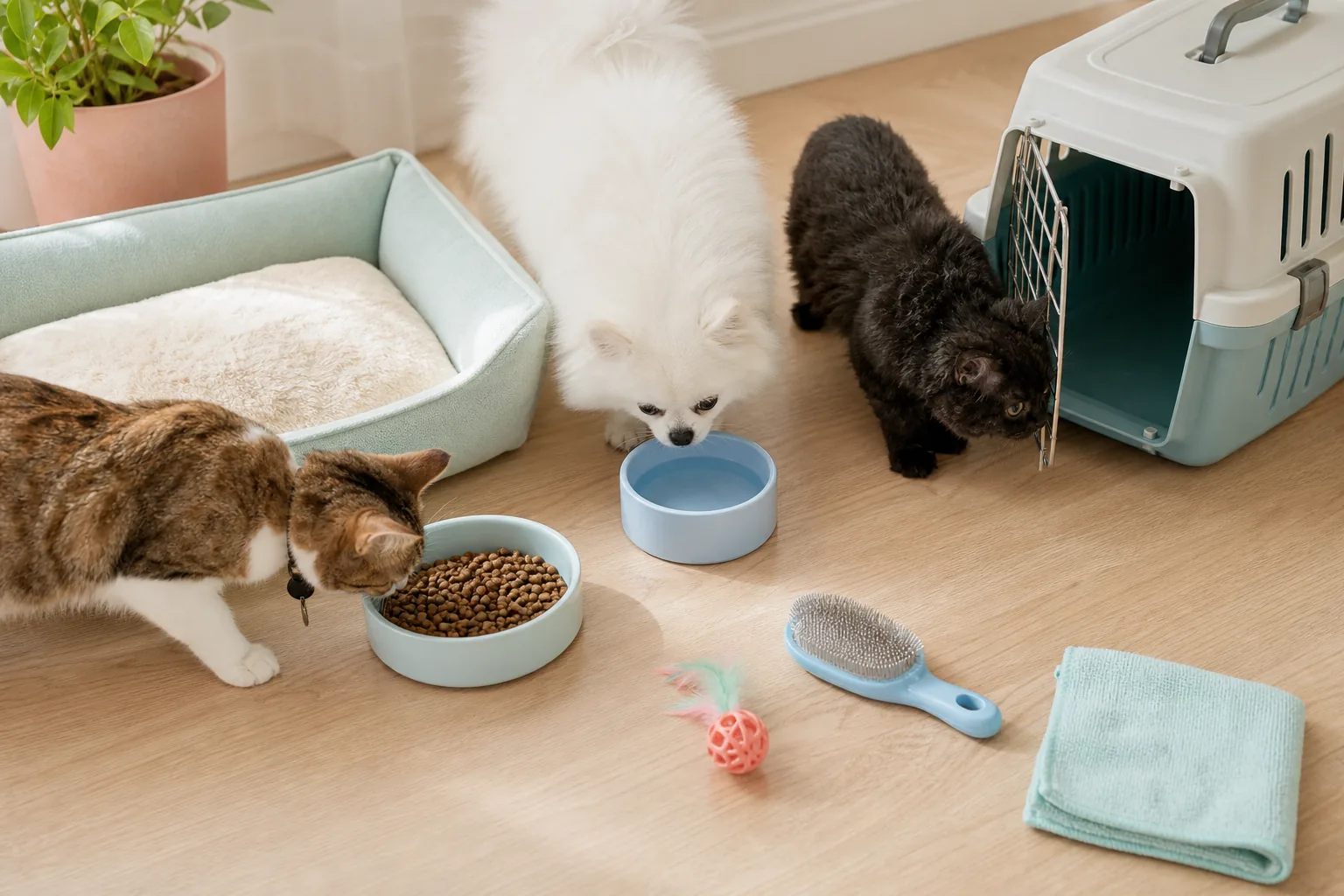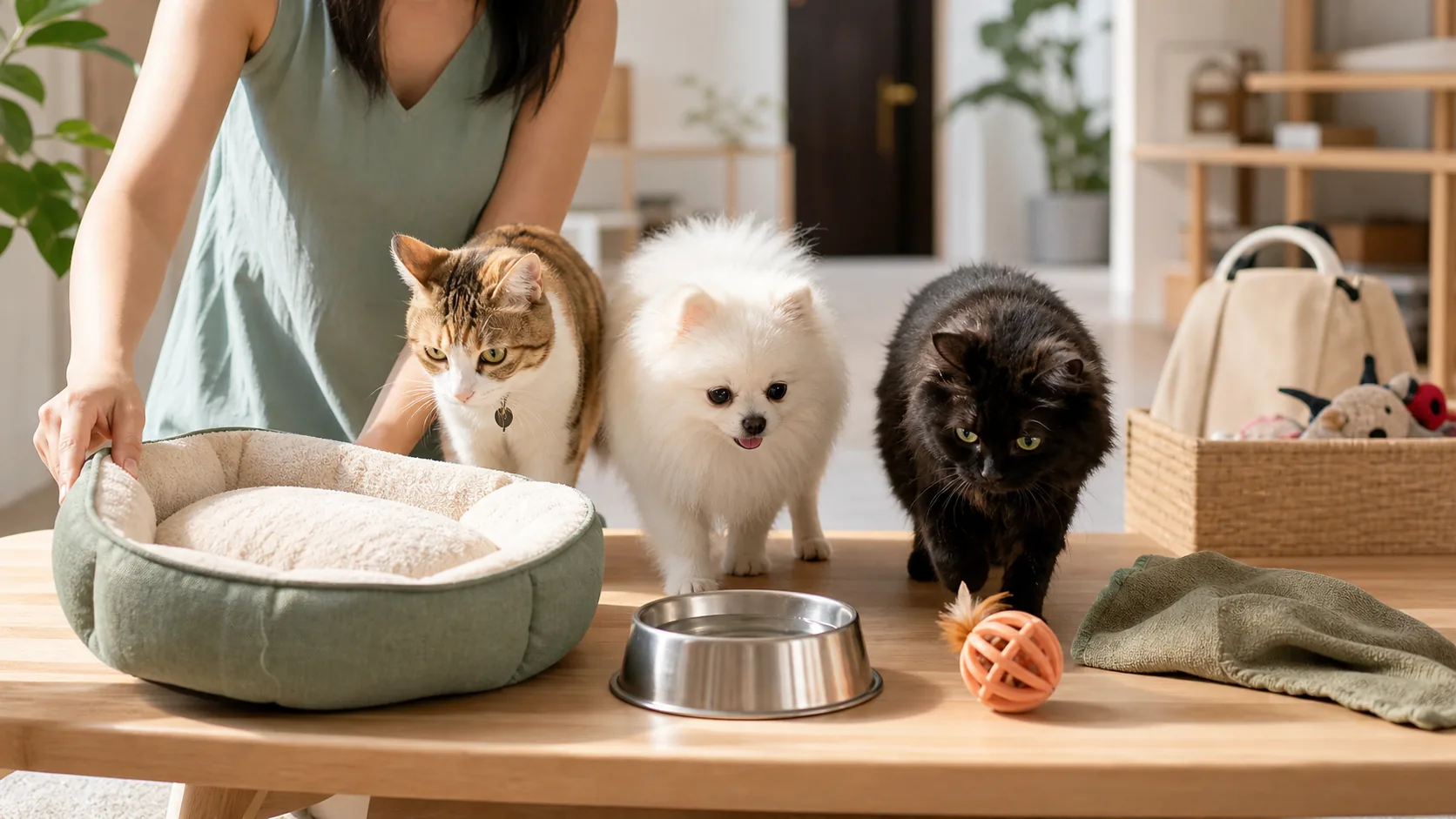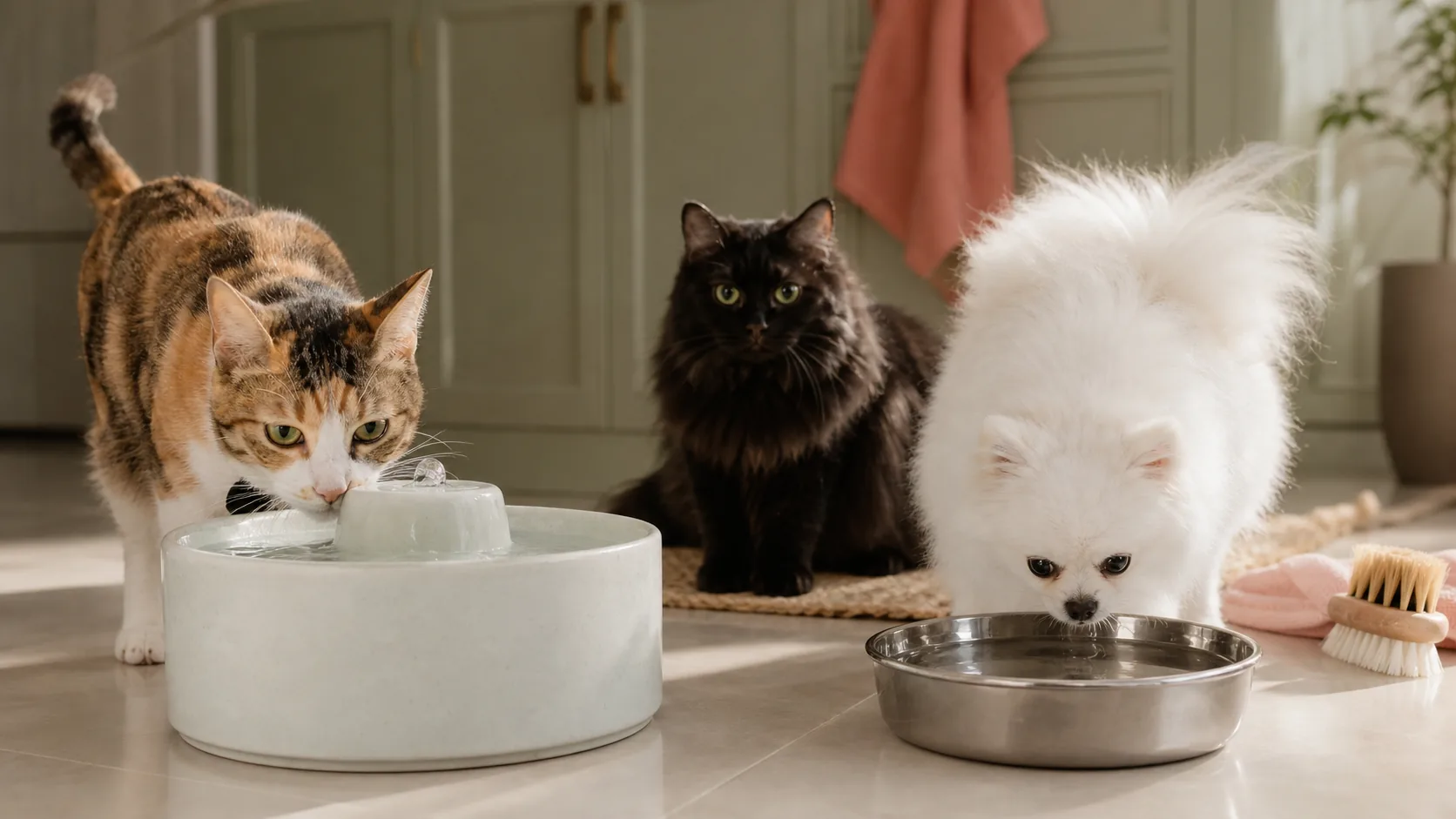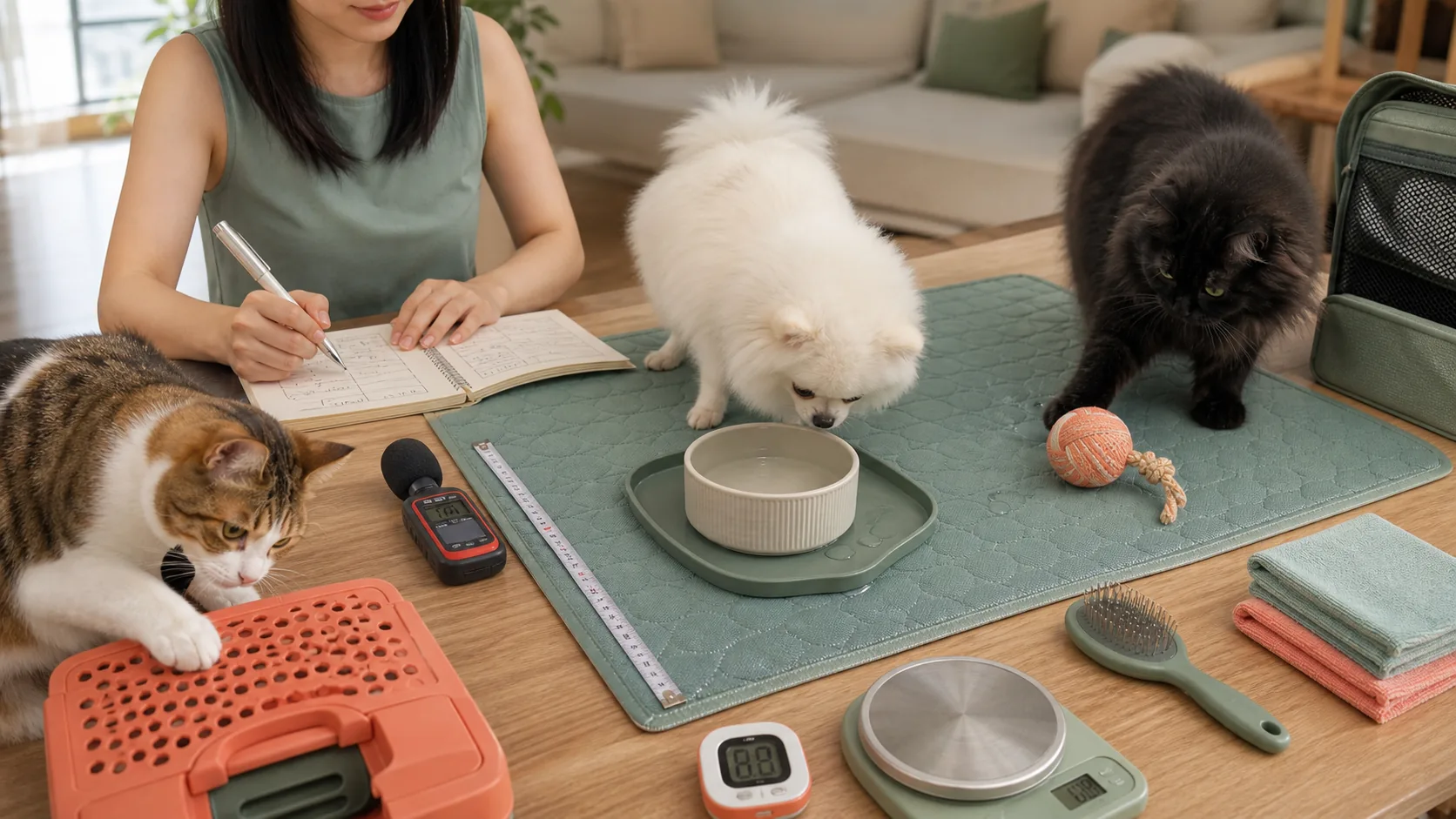
We test pet supplies as parts of a home routine. Every review begins with claims, measurements and safety checks, then tracks setup, voluntary adoption, cleaning, noise, storage, durability and value. Observations from Jiaotang, Pearl and Pudding are reported separately.
What a real-home test can and cannot prove
A home test is good at revealing friction: awkward lids, trapped water, unstable bases, confusing assembly, poor placement and whether a pet voluntarily returns. It cannot establish a medical benefit, universal safety or performance for every breed and body type. We state that boundary because useful editorial work depends on knowing what the evidence can support.
Step one: document before use
We record product name, price, dimensions, materials, included parts, care instructions and visible claims. We photograph the unopened components and measure the usable area, not only the outside dimensions. For electrical products we inspect the cable route and backup plan. For wearables we verify fit according to the maker’s instructions and supervise the first use.
Step two: test the setup
| Checkpoint | Evidence | Why it matters |
|---|---|---|
| Assembly | Time, tools and unclear steps | Setup burden predicts long-term maintenance |
| Footprint | Measured use and clearance | A product must fit the actual room |
| Stability | Normal contact on the intended surface | Movement can reduce confidence or create spills |
| Access | Entry height, opening and reach | Small pets and cats use space differently |
| Care access | Parts reached during cleaning | Hidden surfaces are often skipped |
Step three: allow voluntary adoption
We place the product in a logical location and avoid repeated forced interaction. Familiar scent may be added to a bed or carrier when appropriate. We record first approach, first use and repeat use. Jiaotang’s quick investigation is not treated as the same evidence as Pearl returning to a product on several quiet evenings.
- Day and location of first voluntary approach
- Duration and type of interaction
- Use when no person is prompting
- Changes after cleaning or moving
- Competition or avoidance between pets
- Any point where supervision is required
Step four: clean, store and repeat
We perform the everyday wipe-down and the full clean described by the manufacturer. We time both. We note trapped hair, water, litter or food and measure drying time when relevant. Then the item is stored and set up again. A product that is excellent only when permanently occupying the room has a different value from one that folds, dries and returns easily.
How we write the verdict
The verdict begins with who the product may suit, followed by the strongest reason to choose it and the clearest reason not to. We separate observed fact from interpretation. We disclose when a listing is a douday concept, an affiliate link, a sample or a purchased item. See the full review policy and the companion review scorecard.
Our pets are participants, not equipment
Testing stops when a pet shows sustained fear, distress or unsafe behavior. We do not provoke failures for dramatic footage. Products involving health, restraint, ingestion or unusual risk are used only within appropriate professional guidance and manufacturer instructions.
Frequently asked questions
How long do you test a product?
Simple products may reveal their care and fit quickly, but adoption and durability need longer observation. Our standard editorial rhythm is up to 30 days.
Do brands approve the verdict?
No. Factual corrections are welcome, but commercial partners do not receive control over our conclusion.
Why test with both cats and a small dog?
It exposes differences in scale, access, placement and adoption. We do not claim that three pets represent every animal.