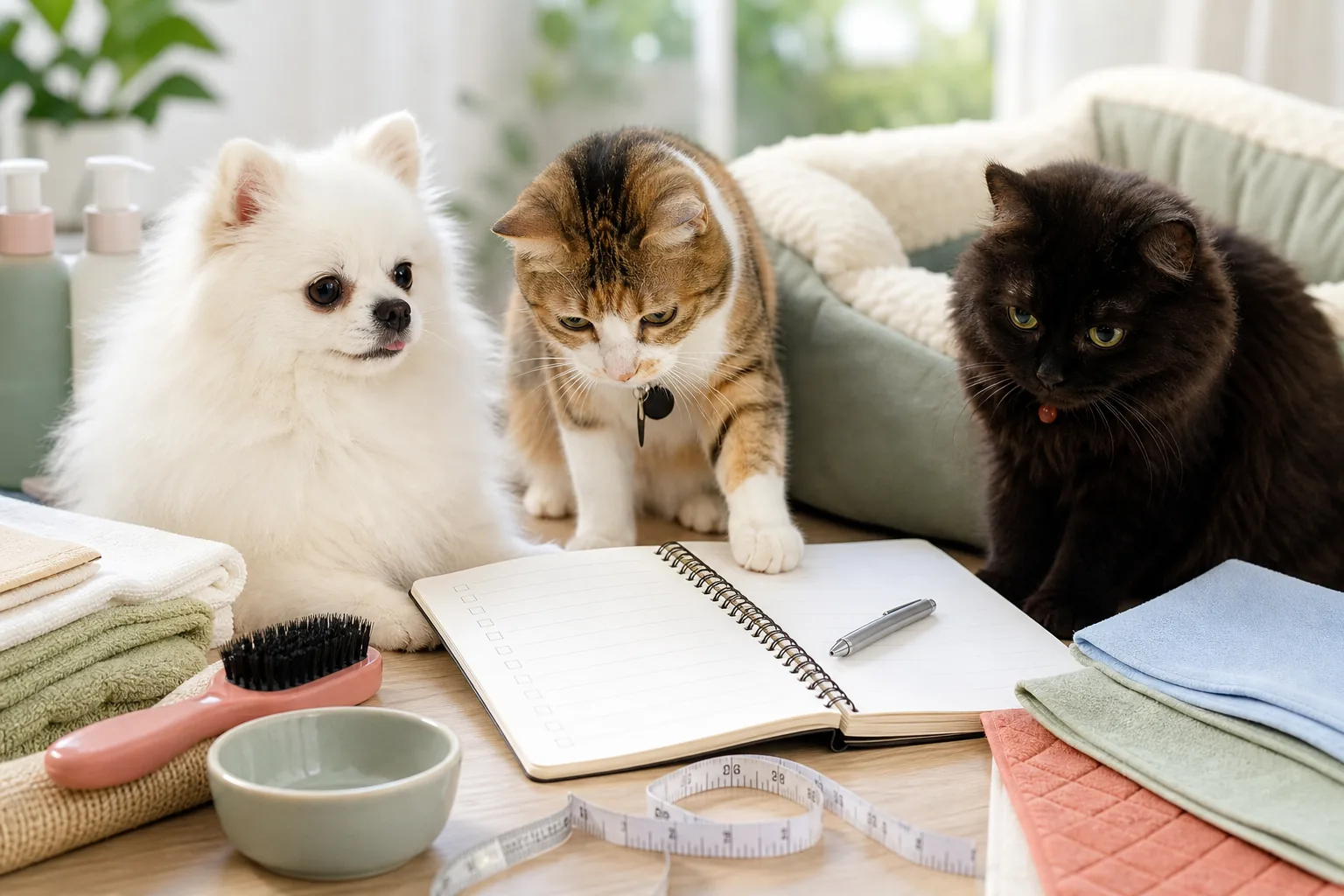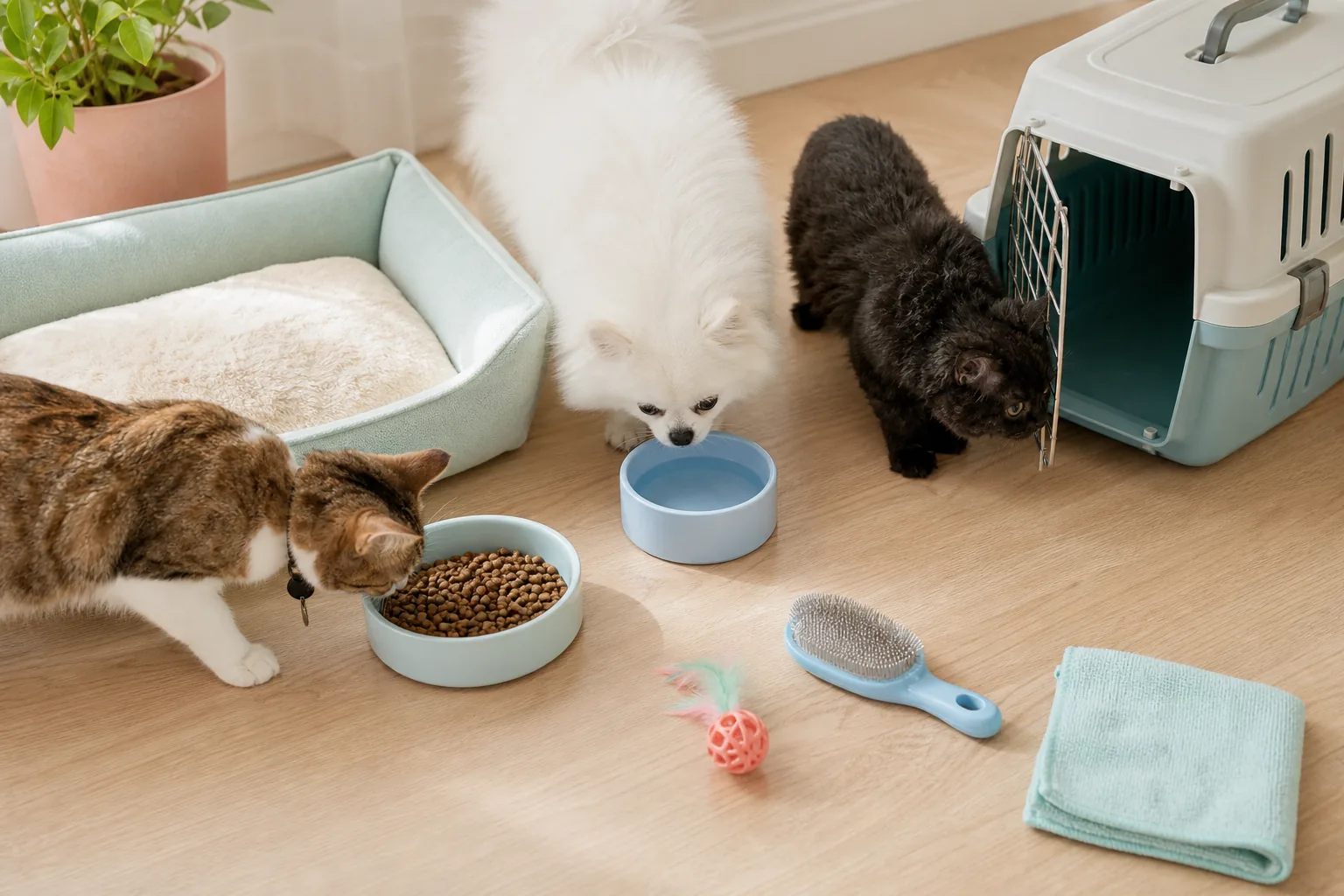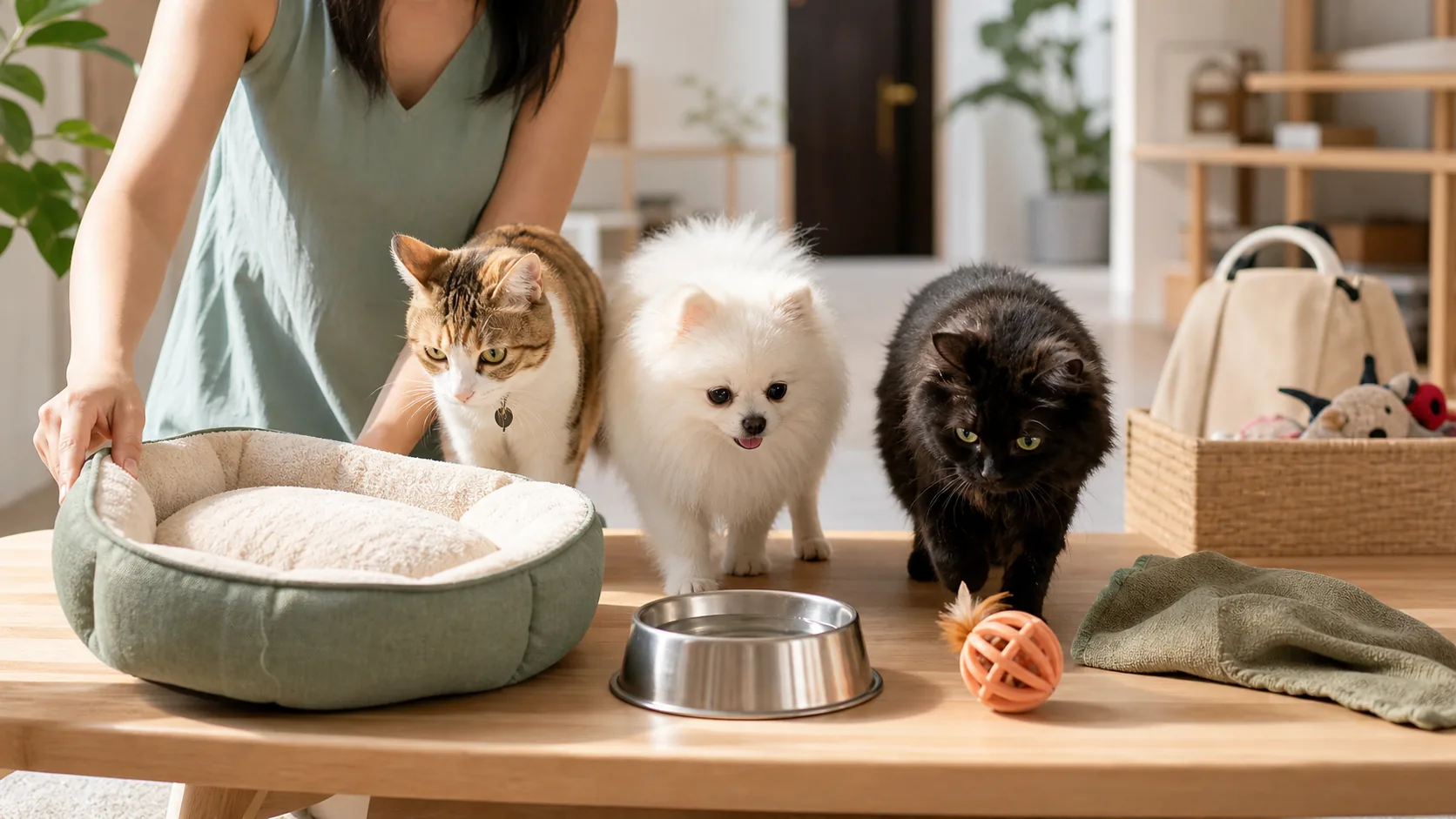
Buy for safety and basic care first: suitable food, water access, hygiene, secure transport, identification and a washable place to rest. Wait on specialized beds, powered feeders and large toy collections until you know the pet’s size, habits and preferences.
Start with the next 24 hours
The first shopping list should answer six ordinary questions. What will the pet eat and drink from? Where will they toilet? How will they travel safely? Where can they hide or rest? How will you clean a small accident? How can someone identify them if a door is left open? If those answers are ready, the home is more prepared than one filled with accessories.
Keep the arrival area quiet. Familiar food, an uncomplicated bowl, a secure carrier or properly fitted walking setup, and one washable rest surface are easier to understand than several competing stations.
Cat and small-dog priorities are not identical
| Routine | Cat first step | Small-dog first step |
|---|---|---|
| Toilet | Accessible litter tray, familiar litter and scoop | Planned outdoor or pad routine and cleanup bags |
| Transport | Stable, ventilated carrier with a removable liner | Measured harness, leash and secure vehicle plan |
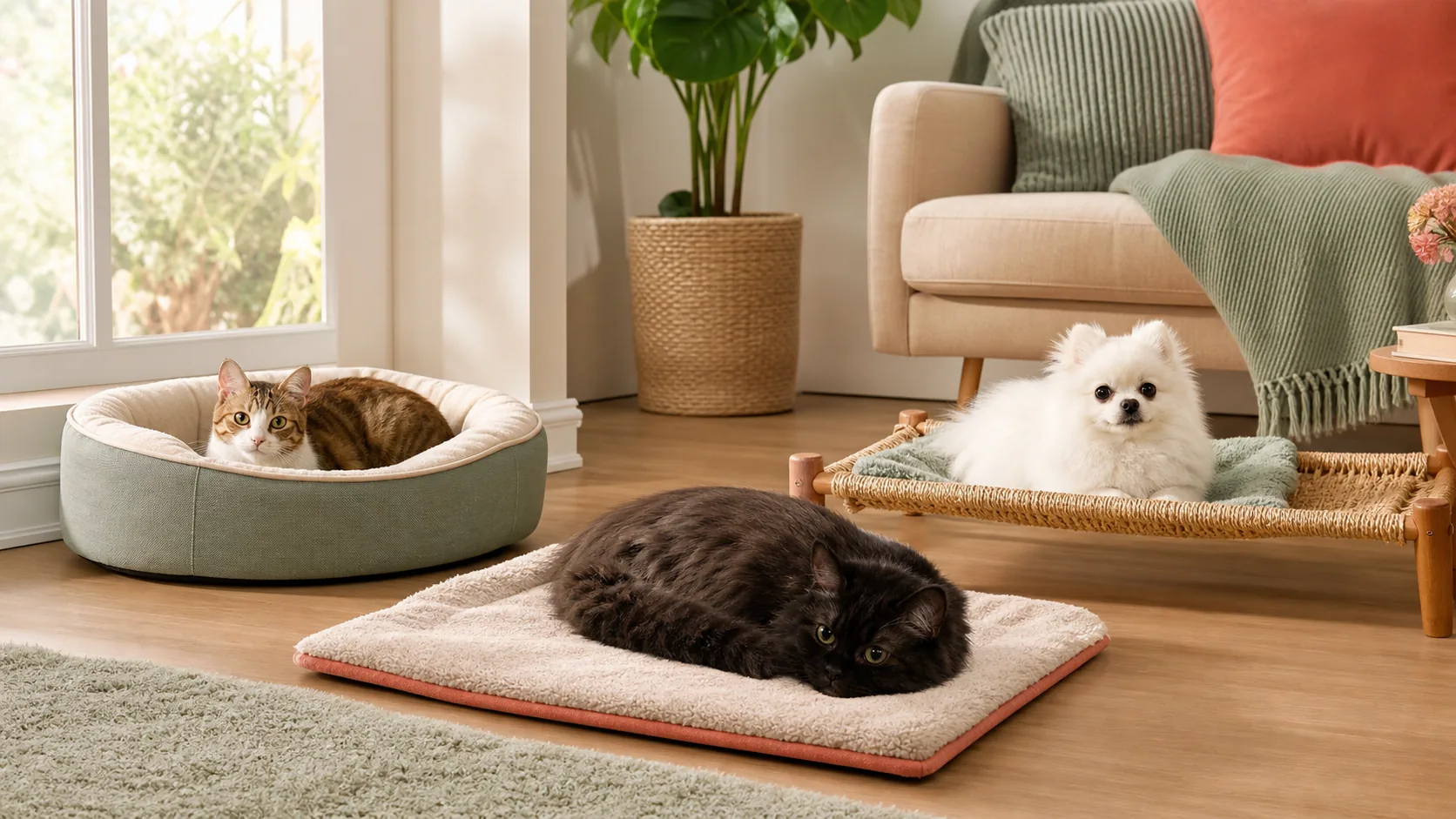
| Rest | Quiet retreat plus a simple washable surface | Draft-free low bed or mat near the household |
| Enrichment | Scratch surface and one wand or rolling toy | One size-appropriate toy and short exploration |
What to add during week one
Observe before upgrading. Record where the pet chooses to sleep, whether the water stays clean, how often the feeding area needs wiping, and which route they use through the room. These details tell you more than a generic best-products list.
- A grooming tool matched to coat length and tolerance
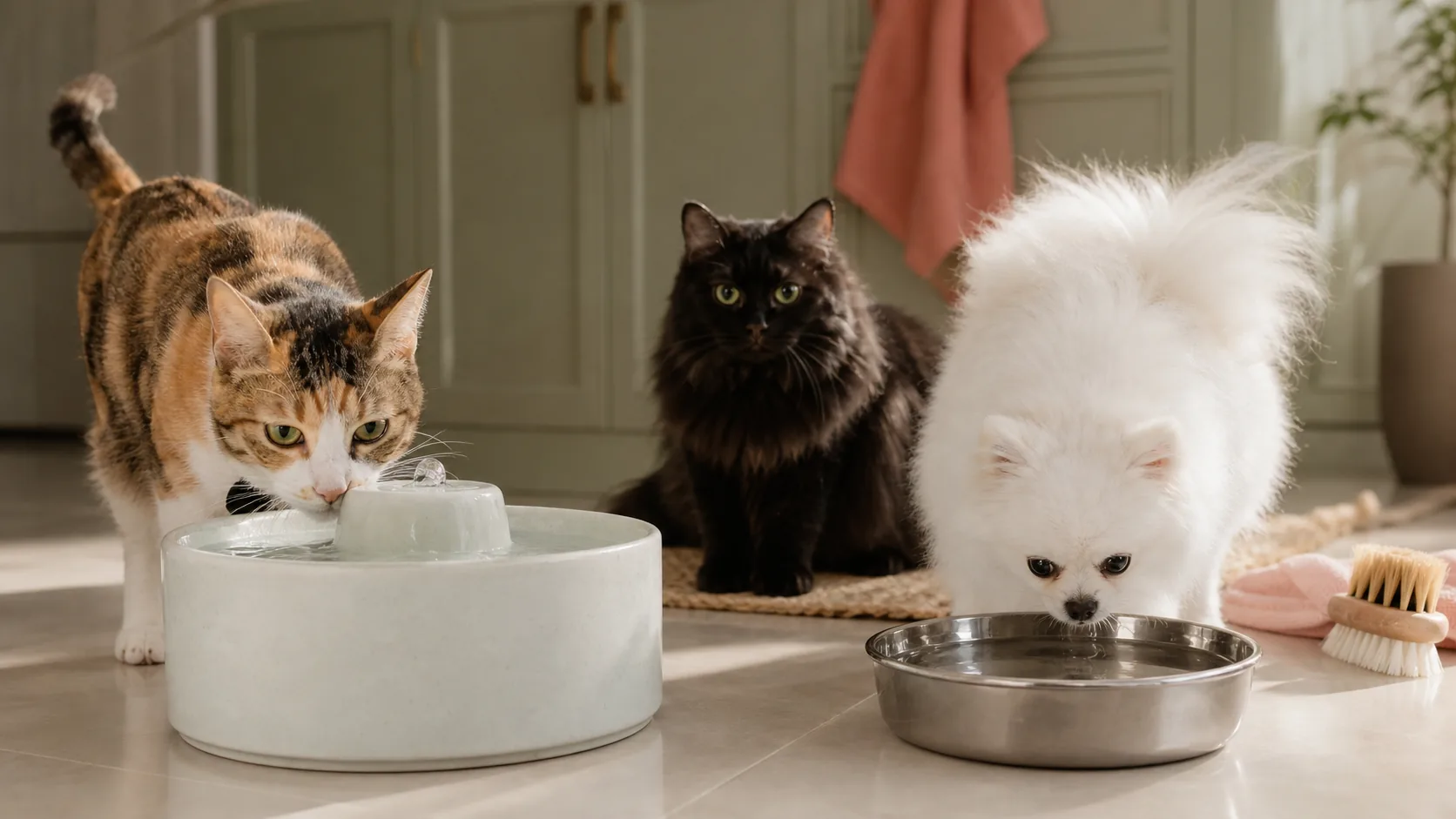
- A second water point if rooms are separated
- A scratcher or toy that matches observed play style
- An organizer only large enough for current supplies
- A first-aid pouch for household preparedness, not self-diagnosis
Products that can usually wait
Delay automatic feeders until meal patterns are stable. Delay fountains until you know whether the pet avoids, ignores or enjoys moving water and whether you can maintain the pump. Delay premium beds until you understand edge height, texture and preferred location. Delay bulk food until the diet is settled and storage conditions are appropriate.
A realistic starting budget
Set most of the first budget aside for safe transport, appropriate food and hygiene. Choose simple washable products in the middle, then keep a reserve for the first genuine problem that appears. A modest item bought with good information is usually better value than an expensive speculative upgrade.
Use our Daily Care First-Aid Pouch as an organizational reference, and see The Starter Kit Problem for the reasoning behind a staged approach.
Frequently asked questions
Should I buy a bed before the pet arrives?
Buy one simple washable rest surface, but avoid assuming the final shape or location. Many pets reveal a strong preference after settling in.
How many toys are enough at first?
One or two safe, simple options are enough to observe play style. Rotate rather than presenting a crowded basket.
Do I need separate bowls for every pet?
Separate feeding is usually easier to monitor. Multiple water points can also reduce competition and make access more convenient.