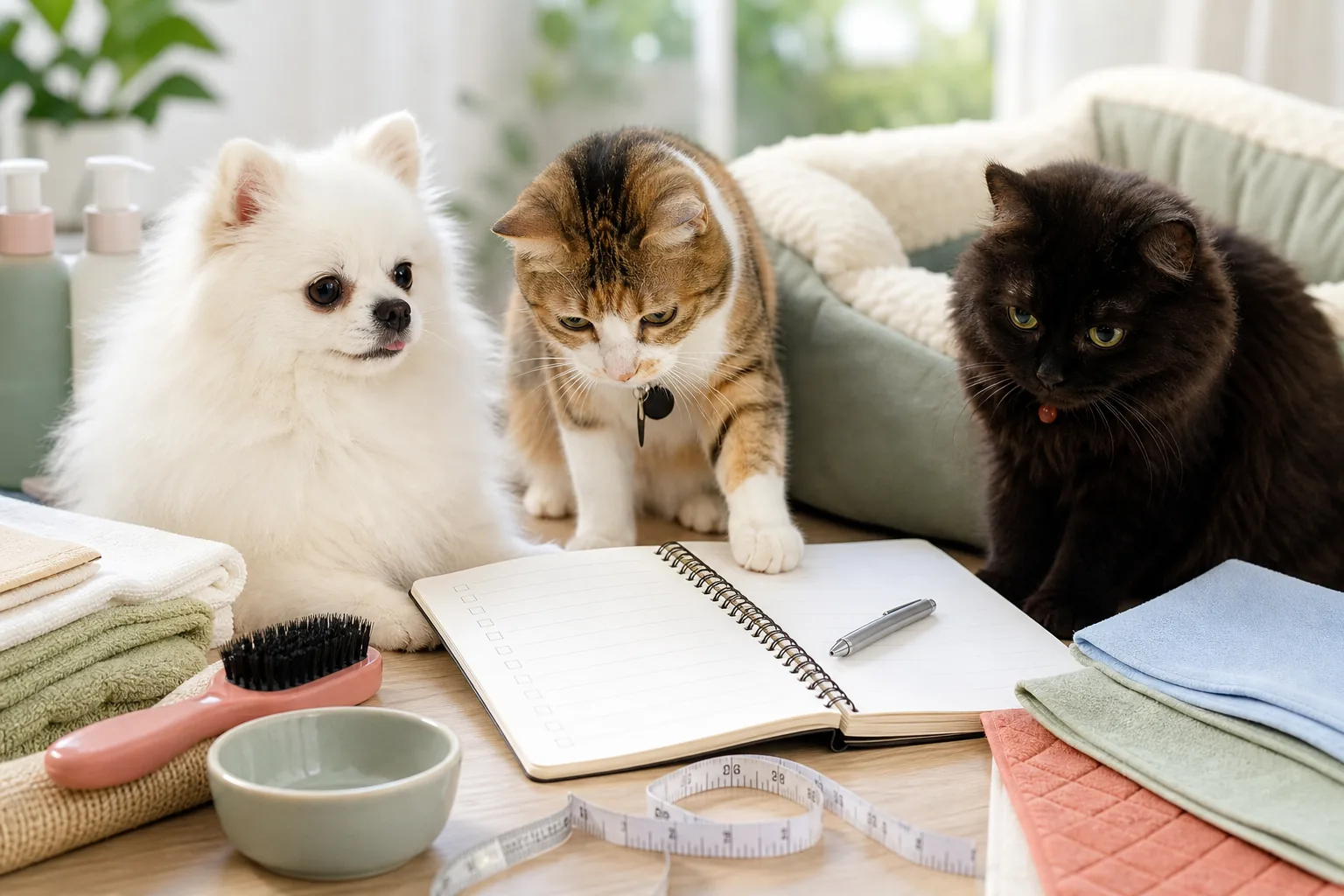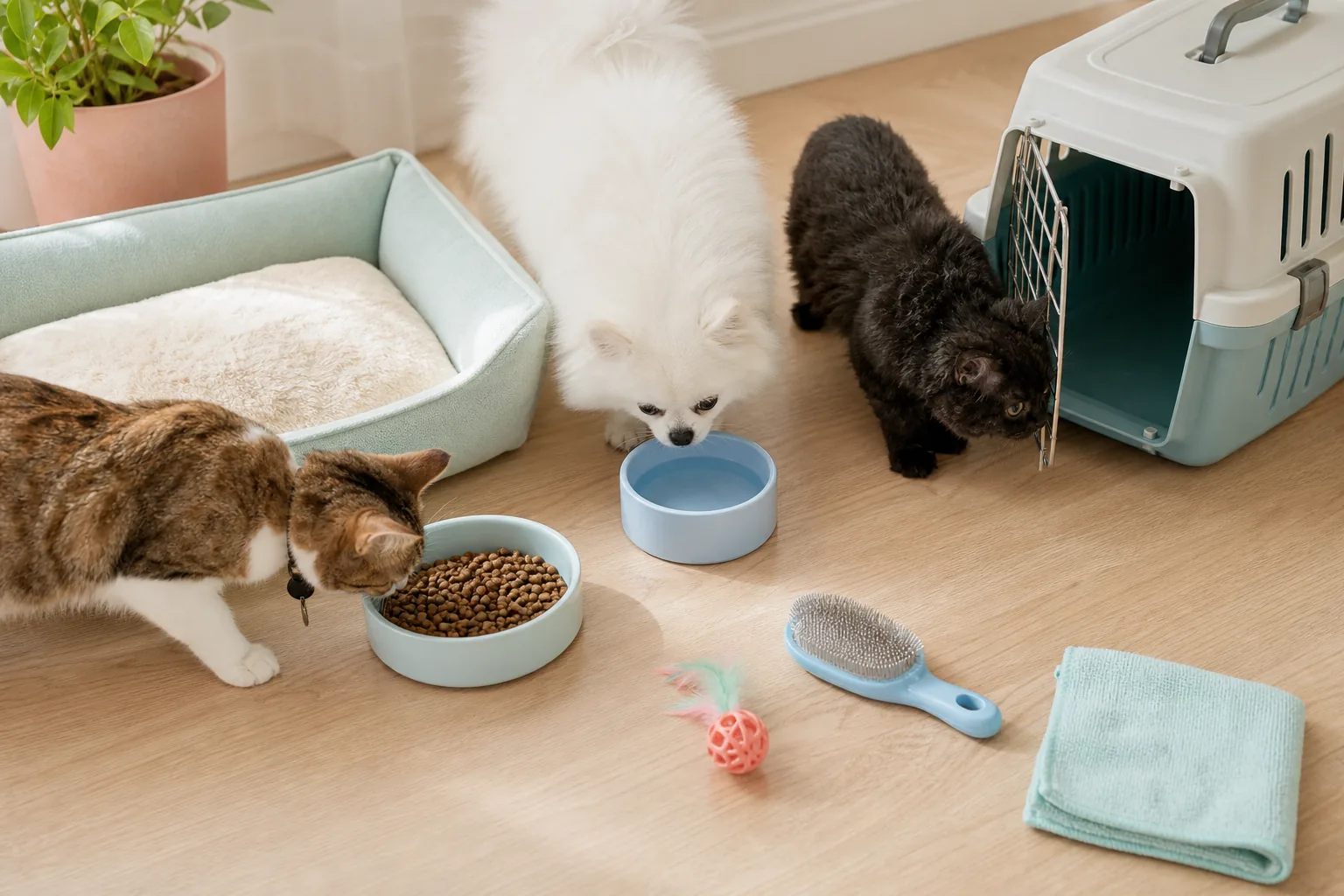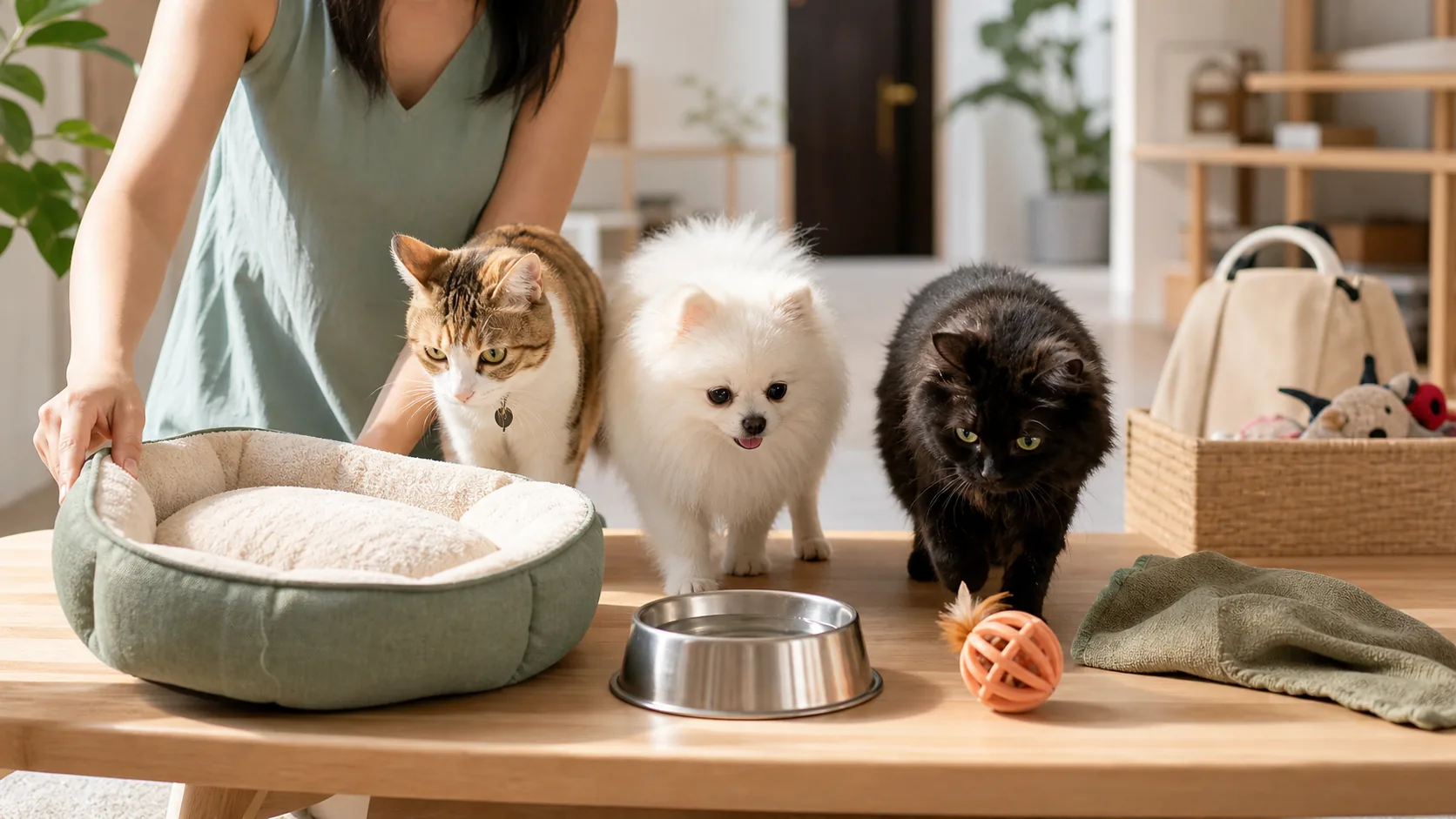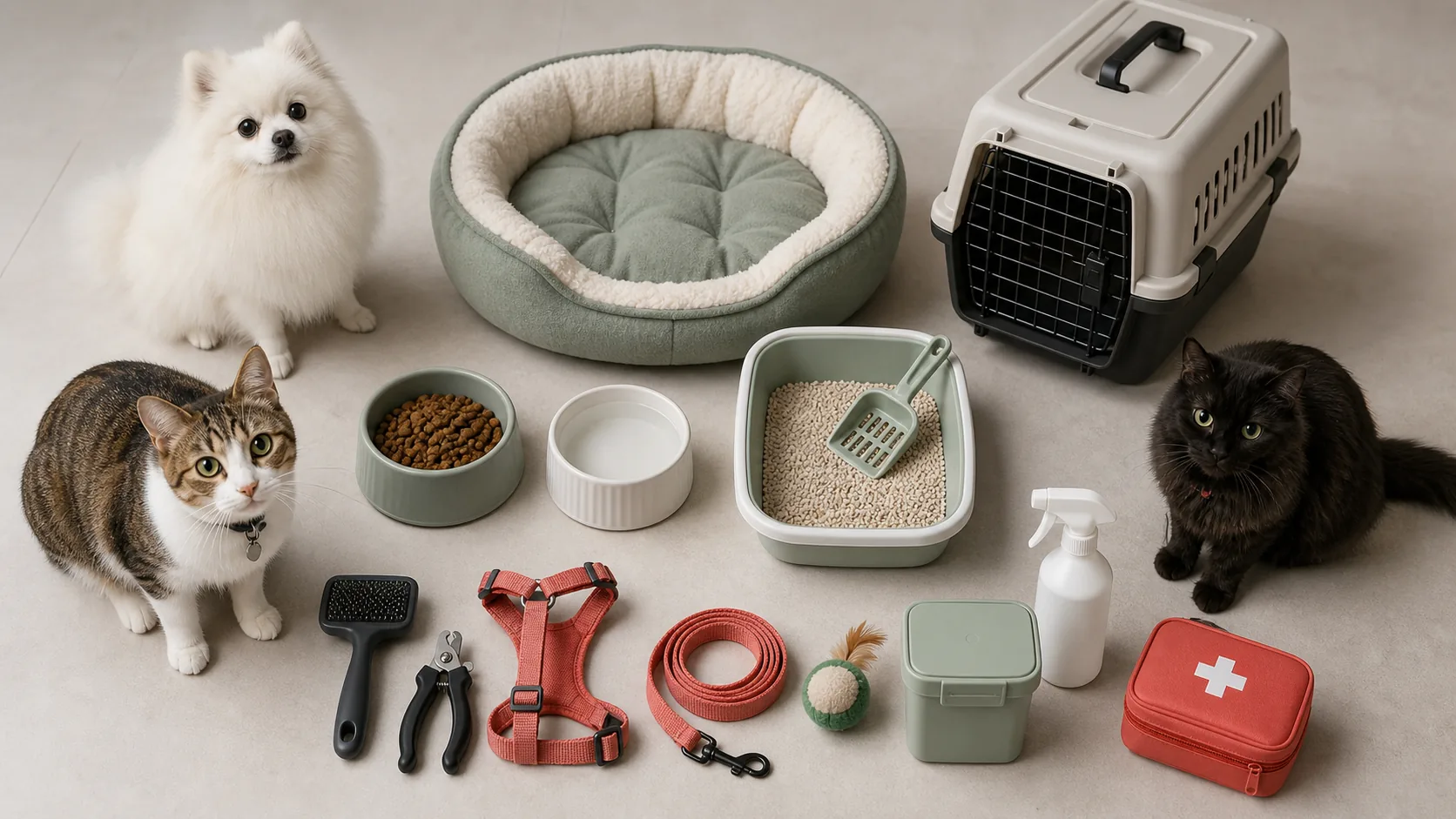
The first twelve supplies should cover food, water, toilet or walking, rest, transport, identification, cleaning, grooming, enrichment, scratch or chew behavior, storage and basic preparedness. Buy the simplest safe version first and personalize after observation.
The twelve-item list
| Priority | Supply | What to verify |
|---|---|---|
| 1 | Appropriate familiar food | Diet, portion and transition plan |
| 2 | Separate food and water bowls | Stable, washable, comfortable height |
| 3 | Litter setup or walking supplies | Easy access and a repeatable schedule |
| 4 | Secure carrier or measured harness | Ventilation, closures and fit |
| 5 | Identification | Current contact details and secure attachment |
| 6 | Washable rest surface | Low-risk material and useful inner size |
| 7 | Cleaning kit | Pet-appropriate products and reachable storage |
| 8 | Coat-appropriate grooming tool | Comfortable handle and gentle introduction |
| 9 | One simple enrichment toy | Correct size and supervised first use |
| 10 | Scratch or chew outlet | Stable placement where the behavior occurs |
| 11 | Small supply organizer | Dry, closed and easy to audit |
| 12 | Preparedness pouch | Emergency contacts and non-expired basics |
Set up in the order a pet experiences the home
Begin with secure transport and an arrival room. Place water, hygiene and a retreat before adding play. Keep food familiar. Confirm doors, windows, cables, plants and small objects. Once the environment is calm, introduce one enrichment option and allow the pet to explore.
- Choose a veterinarian and save the contact details
- Confirm local identification and registration requirements
- Plan a safe introduction to resident pets
- Agree on feeding, walking and cleaning responsibilities
- Keep an emergency transport route available
What is intentionally missing
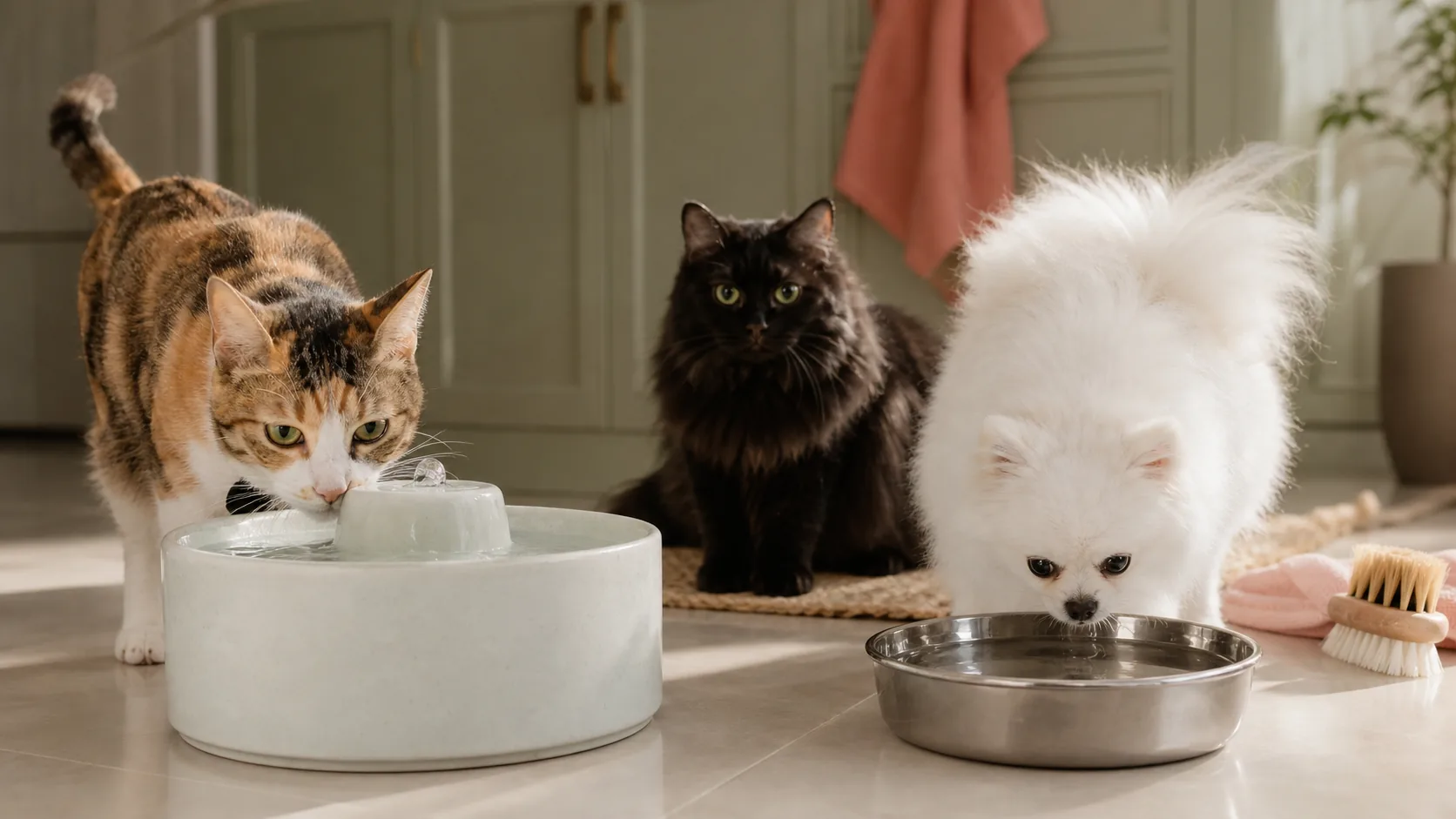
The list does not require an automatic feeder, fountain, elaborate bed, wardrobe of clothing or large toy box. Those can be useful, but only after the household understands timing, preference, size and maintenance. Our What Should I Buy First? Q&A explains how to stage those decisions.
How to budget without buying twice
Spend carefully on transport, fit and hygiene because failure in those areas creates immediate risk or disruption. Choose washable middle-priced rest and feeding items. Keep part of the budget unspent for the first observed friction point, such as litter tracking, a difficult coat or a pet that needs a second water location.
What should be duplicated in a multi-pet home
Duplicate access before duplicating decoration. Separate feeding, multiple water points, more than one rest location and enough toilet resources reduce competition. Cleaning tools and storage can often be shared if they remain hygienic and clearly organized.
Frequently asked questions
Must I buy all twelve before arrival?
No. Prepare the first six plus cleaning. Add grooming, enrichment and organization as the pet settles.
Can I use household bowls and blankets?
Often yes, if they are stable, washable, safe for the pet and can be dedicated to the routine.
What belongs in a preparedness pouch?
Emergency contacts, copies of key records and basic supplies recommended by your veterinarian. It is for organization, not replacing professional care.