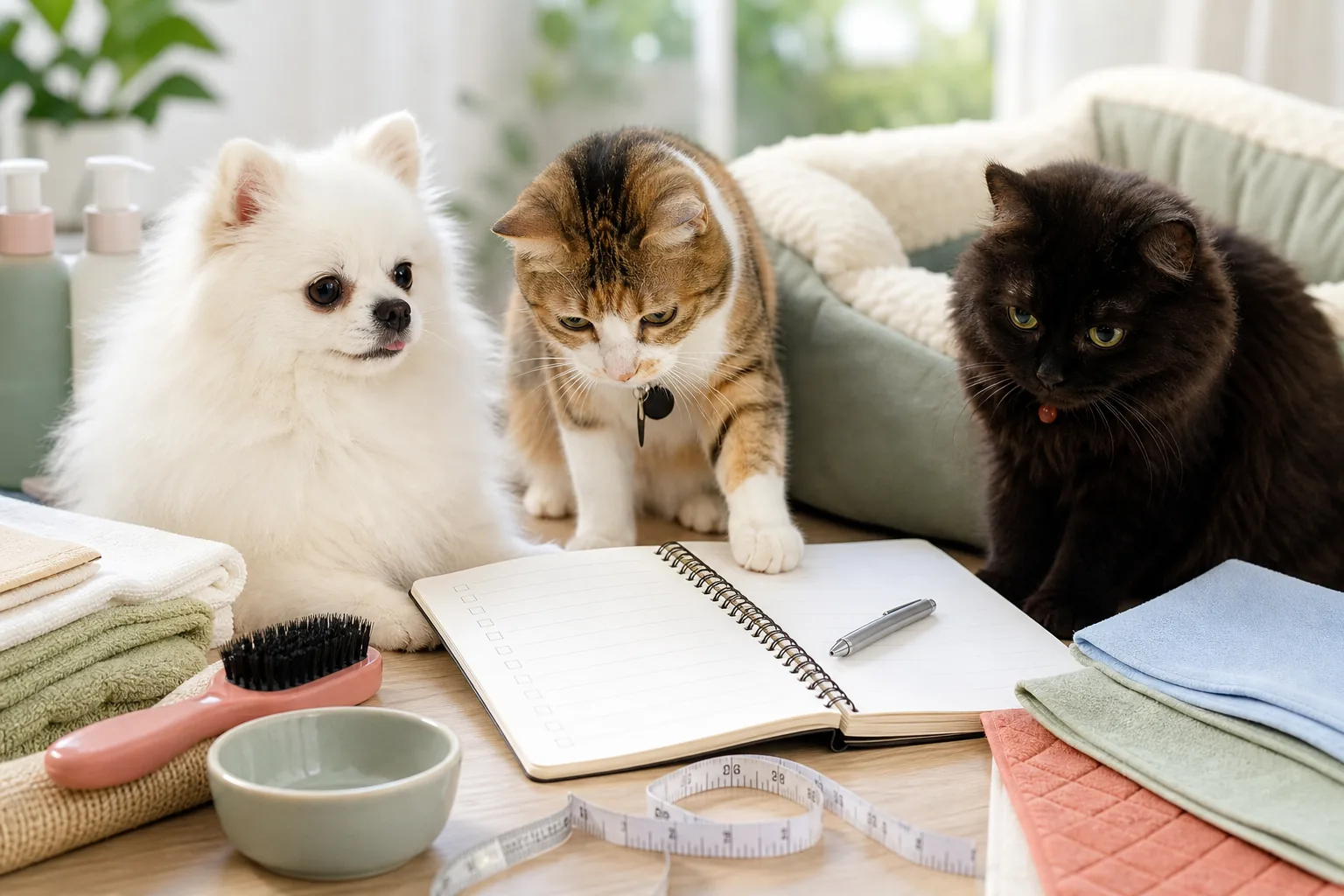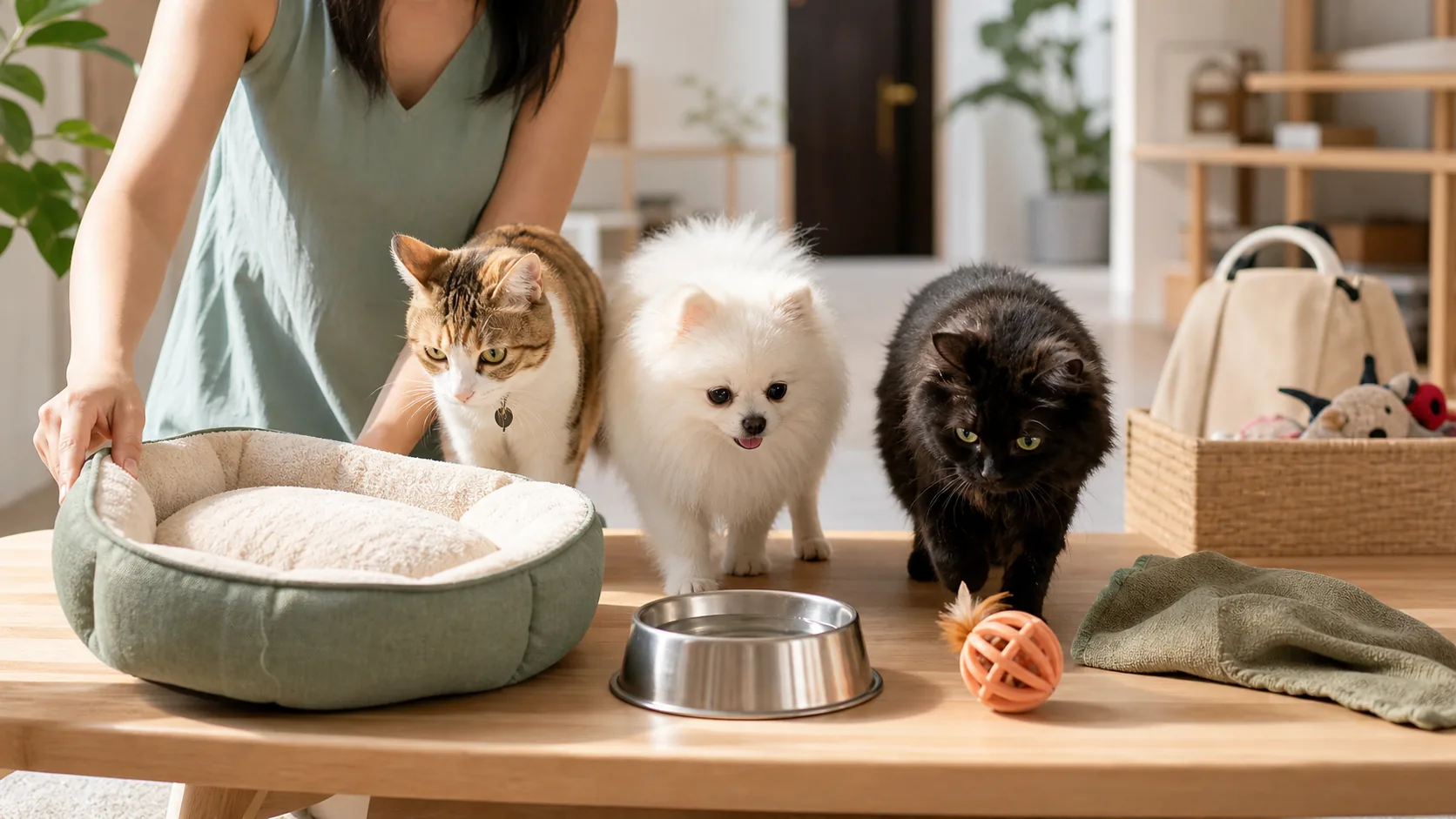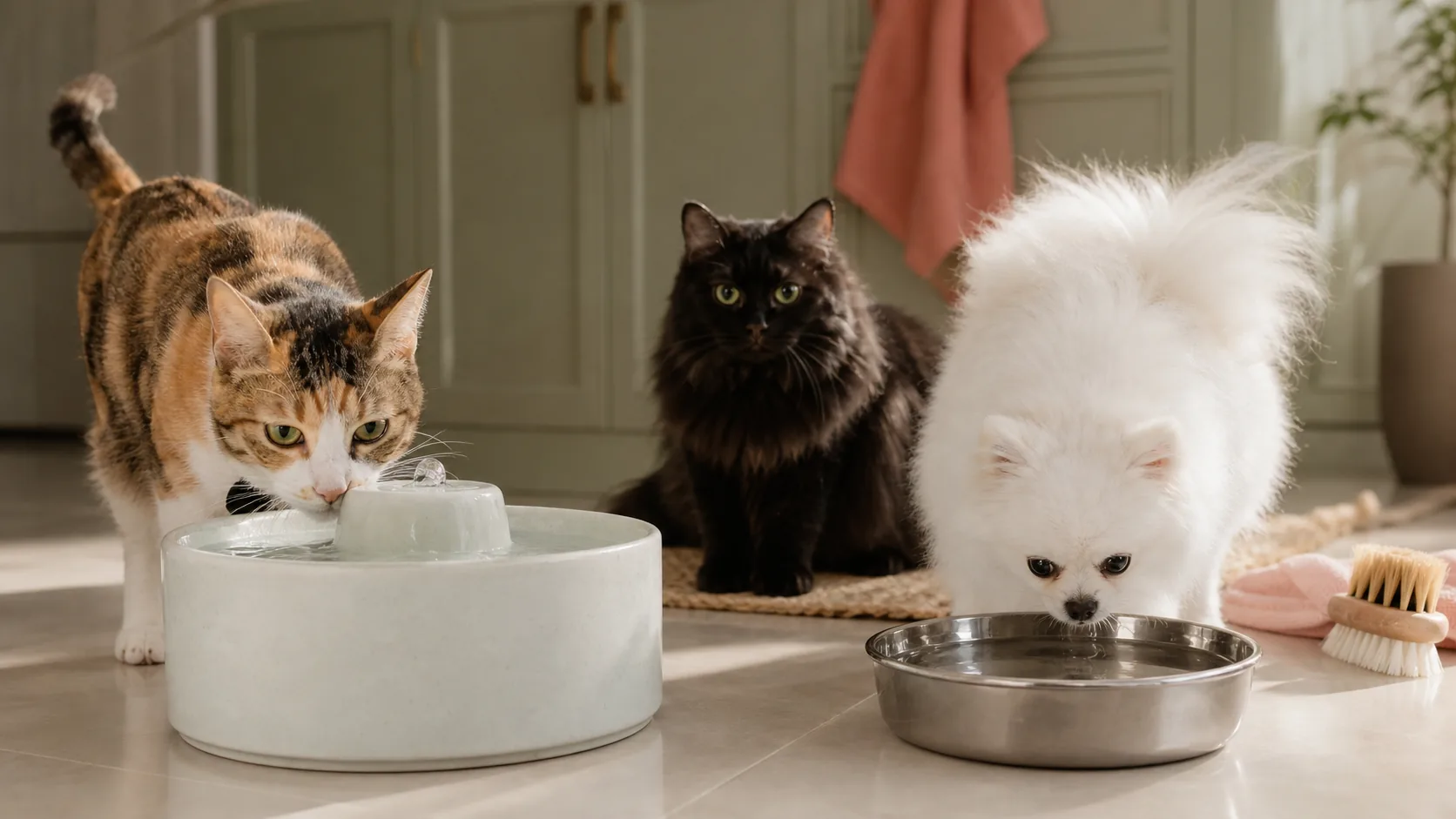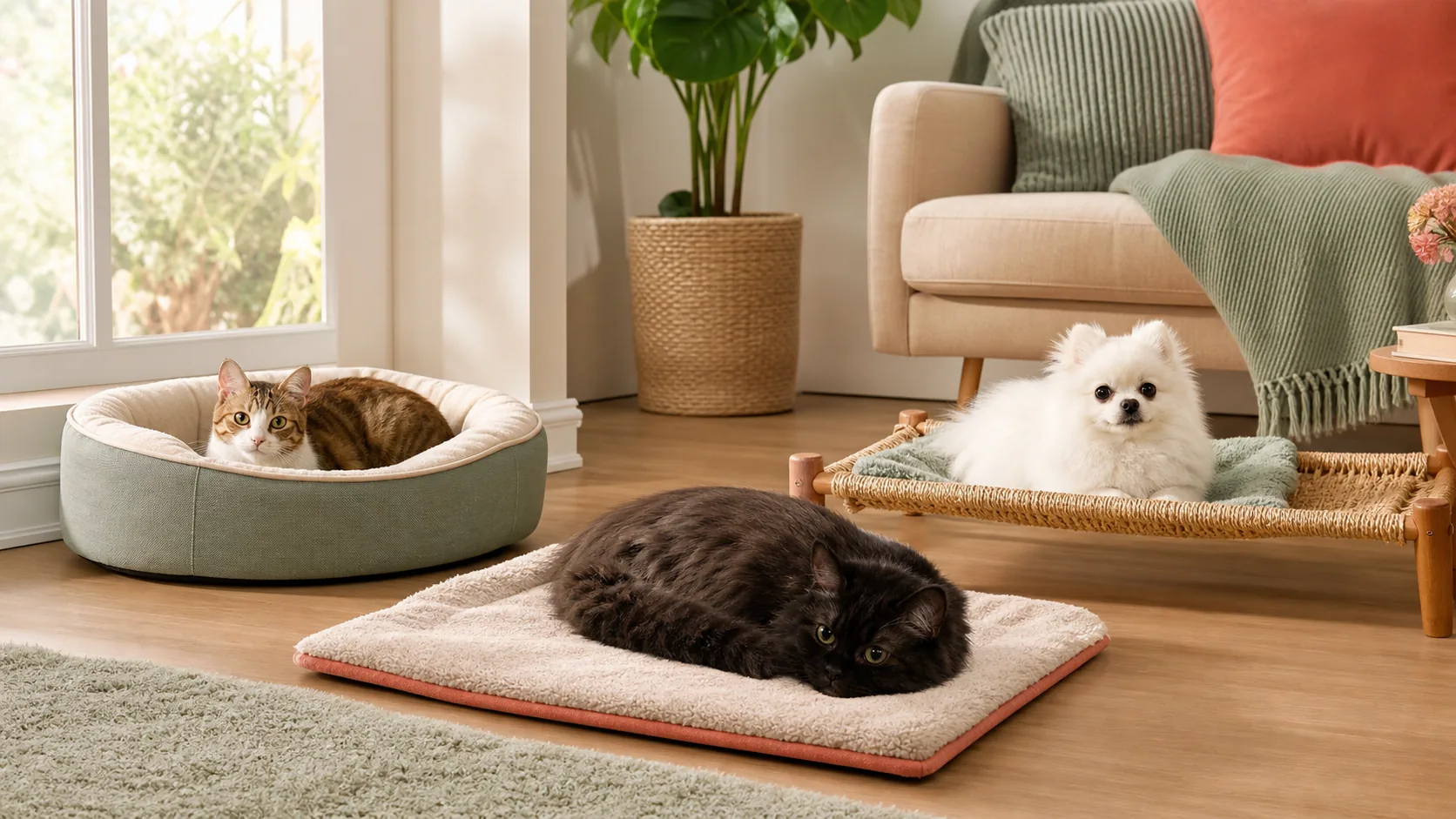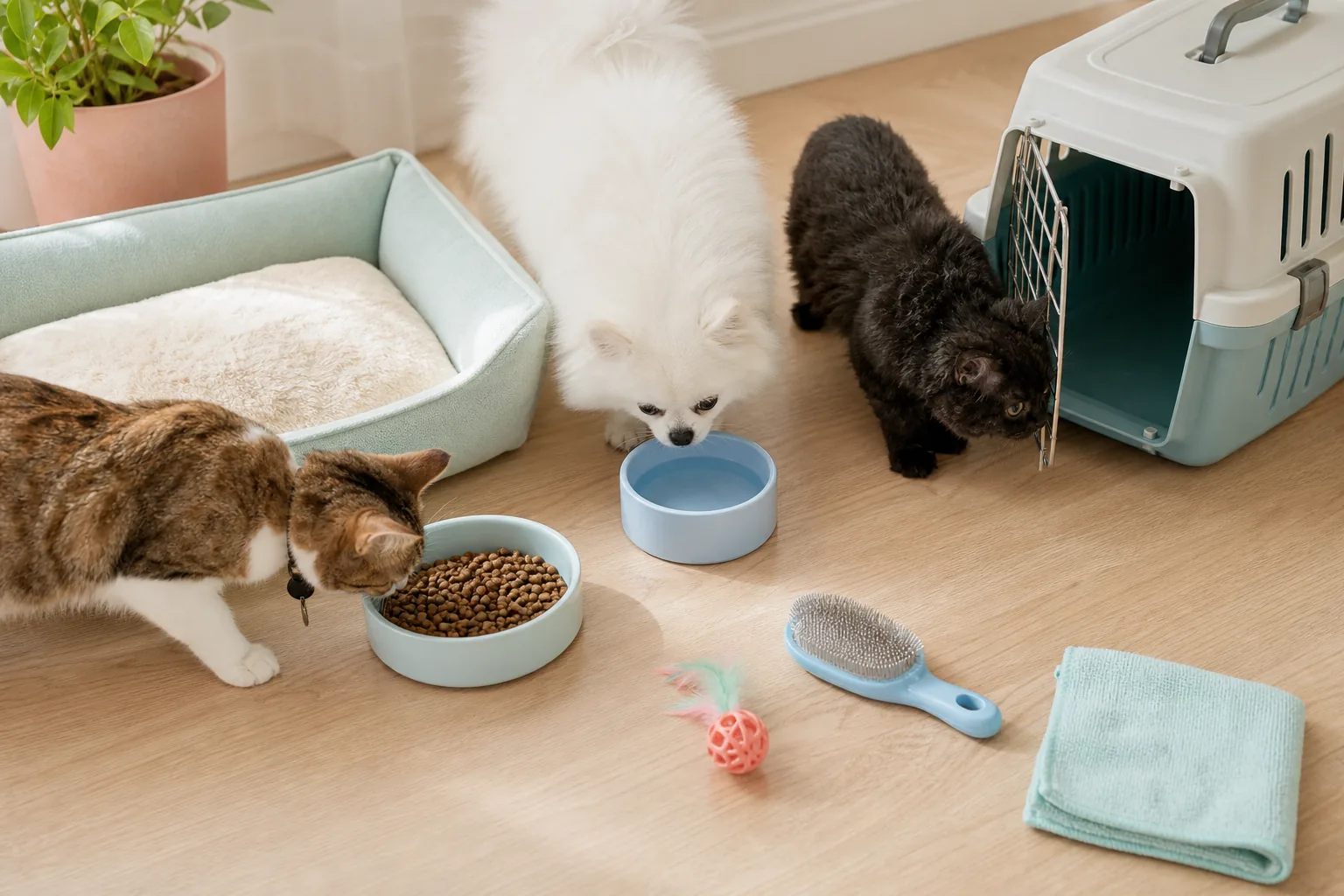
A starter kit should solve the first seven days, not predict every future preference. Begin with food and water, a safe rest place, hygiene, transport and one simple enrichment option. Add upgrades only after the pet reveals a real routine.
The problem with the word starter
In shops, starter often means bundle. In a home, it should mean sequence. A large bundle mixes genuine first-day needs with products that depend on size, personality, diet, room layout or training. The result looks complete but often creates three problems: duplicated items, difficult returns and a room full of objects the pet has not chosen.
In this episode we use Jiaotang, Pearl and Pudding as a reminder that pets in the same home do not adopt products in the same order. The cats care deeply about location and scent. Pudding makes fit, handle height and travel weight visible. A universal kit cannot know those details in advance.
Separate needs, comfort and convenience
| Layer | Buy when | Examples |
|---|---|---|
| Immediate needs | Before arrival | Appropriate food, two bowls, hygiene setup, secure carrier or harness, identification |
| Basic comfort | During the first week | Washable rest surface, scratch option, simple toy, grooming tool suited to the coat |
| Convenience upgrades | After a routine is visible | Automatic feeder, fountain, specialized bed, larger organizer, travel accessories |
A three-stage shopping plan
Stage one: make the home safe. Prepare the feeding point, toilet or walking routine, a quiet retreat and secure transport. Keep choices simple and familiar. Stage two: observe. Note where the pet sleeps, drinks, scratches, waits and retreats. Stage three: upgrade one friction point. Buy the product that solves a repeated issue rather than the one with the most impressive feature list.
- Can an item already in the home perform this job safely?
- Does the purchase depend on the pet’s measured size or observed preference?
- Is there a clear place to use, wash and store it?
- Can it be returned after a careful introduction?
What we would put in a focused first box
For a mixed cat and small-dog home, we would choose separate food bowls, reliable water access, one low washable mat, a secure species-appropriate transport setup, basic cleaning supplies, one grooming tool and one quiet toy. Our Routine Supply Organizer is a concept for keeping that small system visible; it should not become permission to fill every compartment.
For a complete item-by-item list, read The First 12 Pet Supplies I Would Buy for a New Home. The important part is the order, not owning twelve objects on day one.
Frequently asked questions
Are bundled starter kits always poor value?
No. A bundle is useful when its core items match the pet and every piece has a planned location. Compare the usable components, not the discount percentage.
When should I buy an automatic feeder?
After meal size, food type and timing are stable, and after confirming that the mechanism is easy to clean and reliable for your routine.
Should two pets share the same supplies?
Some storage and cleaning tools can be shared. Food, water, rest and toilet access often benefit from multiple locations to reduce competition.